
Urine-soaked clay licking by Linnaeus's two-toed sloth, Choloepus didactylus, in Loreto, Peru
15 minutes compressed to 14 seconds of two sloths visiting an artificial mineral lek
Urine-soaked clay licking by Linnaeus's two-toed sloth, Choloepus didactylus, in Loreto, Peru
Author: Anthony Giardenelli
Abstract: I report the second published observation of urine consumption by Linnaeus's two-toed sloth, Choloepus didactylus. A trail camera recorded a sloth licking urine-soaked clay near Orán, Loreto, Peru, on 13 October 2026, at 20:34, remaining approximately 26 minutes. A second visit at 23:06 appeared to be a different individual based on body shape. The substrate was a clay surface repeatedly used as a urination site, not a natural mineral lick.
Keywords: Choloepus didactylus, urine consumption, clay lick, Loreto, Peru, feeding behavior.
Mineral licks are well-documented feeding sites for Amazonian mammals, and two-toed sloths are among the species recorded visiting them. Mosquera et al. (2019) documented C. didactylus at a salt lick in Tiputini, Ecuador, with 201 camera-trap videos over a single year, mostly between 19:00 and 03:30. Gómez-Hoyos et al. (2017) recorded C. hoffmanni licking rocks at Las Cruces, Costa Rica, and Durán-Apuy and Mora (2023) reported a similar observation at Cahuita, Costa Rica, where a female licked saline sand while hanging from a tree. All of these records involve soil, rock, or sand. Heymann et al. (2011) reported the only published observation of urine consumption by a two-toed sloth — C. didactylus at Quebrada Blanco, Peru, where individuals licked urine-soaked soil at a human latrine. Here I report a second observation of urine consumption by C. didactylus, at a clay surface repeatedly used as a urination site.
Observations were made at a clay surface at the base of a Didymocistus chrysadenius tree along a trail near Otorongo Amazon River Lodge, outside Orán, Loreto, Peru (3.47401°S, 72.51489°W; ~100 m elevation). The site lies in lowland terra firme forest. One lodge worker had used the same spot as a urination site for approximately three months prior to the records. The substrate attracted attention because of the smoothing of the clay surface and what appeared to be an excavation from repeated licking.
I deployed a Garde Pro trail camera at the site. The camera recorded one-minute videos and bursts of three photographs triggered by motion. On the night of 13 October 2026, the first descent occurred at 20:34 and the sloth remained at the lick until approximately 21:00. A second visit occurred at 23:06; the individual remained until 23:35 and then ascended the same tree. The species was identified as Choloepus didactylus based on body and snout shape, the presence of two claws on each forelimb, and the geographic location (this is the only two-toed sloth occurring in Loreto north of the Amazon River).
The first visit began at 20:34, when the sloth descended the tree head-first and began licking the clay surface. Licking was continuous, with the sloth opening its mouth and appearing to chew at intervals. It repositioned itself several times, moving around the tree trunk to reach different spots on the clay surface. At times it would dip its head completely in the hole and would scrape clay in its mouth. The sloth would then sit upright and apparently chew the mineral soaked clay. The first visit lasted approximately 26 minutes, ending around 21:00. A second visit occurred at 23:06.
The second visit lasted until 23:35 and ended with the sloth walking away from the camera on the ground; it later ascended the same tree. Based on differences in body shape, size, and pelage visible in the black-and-white footage, the second visitor appears to be a different individual (a slimmer animal in which external genitals were visible in one still frame). The first individual has a more robust form, especially in the abdominal area, suggesting a female, though this could not be confirmed with certainty. No other mammals were recorded at the lick during the same night.
This observation adds to the limited literature on mineral and urine consumption by two-toed sloths. The sodium hypothesis remains the leading explanation for mineral licking in Amazonian mammals, and urine is a concentrated source of sodium, potassium, and nitrogen. The chewing behavior observed here suggests actual ingestion rather than incidental contact with the substrate. The half-hour duration of the first visit is notably longer than most recorded sloth descents, which typically last only minutes. The return of a second individual at 23:00 suggests the site may function as a shared resource rather than a location used by a single animal. Further observations at this and other sites, including soil and urine chemistry, would help clarify the nutritional value of these substrates for sloths.
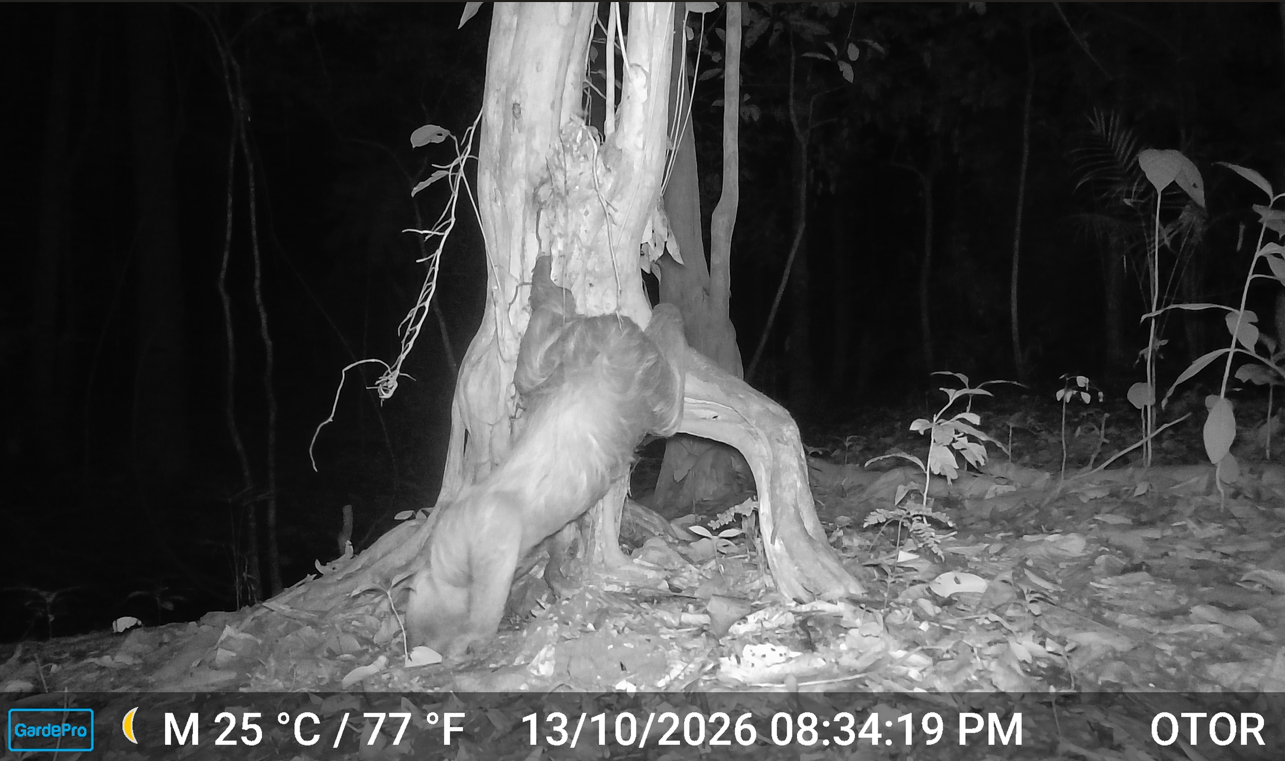
Figure 1. Still frames from a trail camera of Choloepus didactylus at a urine-soaked clay surface near Otorongo Amazon River Lodge, Orán, Loreto, Peru, 13 October 2026. The sloth has its head and right forelimb sunk into the excavated hole while scraping clay.
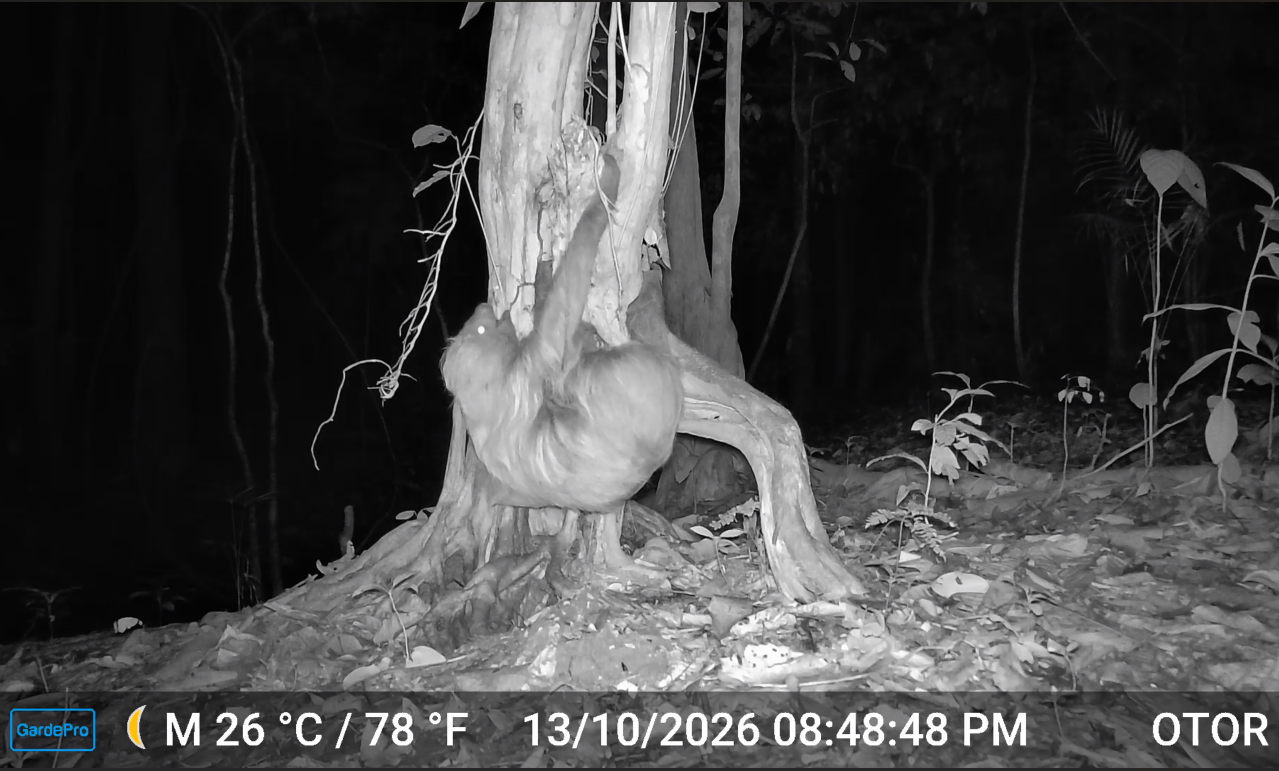
Figure 2. Sloth 1 hanging upright, chewing on residual clay.
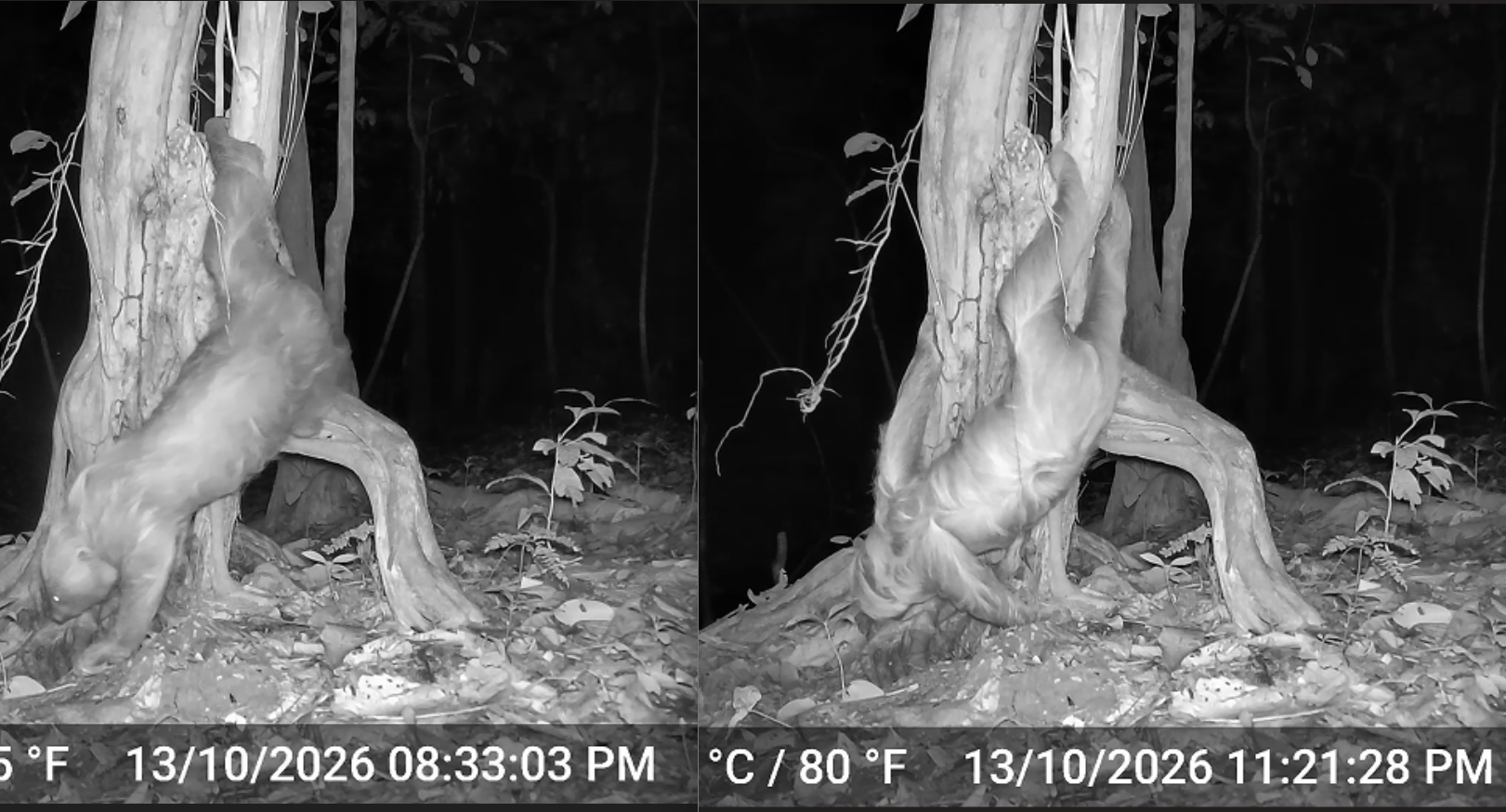
Figure 3. side by side comparison of the two sloths, note robustness in sloth one as well as distinct lighter colored fur.
References
Durán-Apuy, A., and J. M. Mora. 2023. Sand consumption by Hoffmann’s two-toed sloth (Choloepus hoffmanni) at Cahuita National Park, Costa Rica. Therya Notes 4:232–235. https://doi.org/10.12933/therya_notes-23-134
Gómez-Hoyos, D. A., J. F. González-Maya, J. Pacheco, R. Seisdedos-Vergara, C. L. Barrio-Amorós, and G. Ceballos. 2017. Mineral-lick use by Choloepus hoffmanni (Pilosa: Megalonychidae) at Las Cruces Biological Station, Coto Brus, Costa Rica. Southwestern Naturalist 62:278–280. https://doi.org/10.1894/0038-4909-62.4.278
Heymann, E. W., C. F. Amasifuén, N. S. Tello, E. R. Tirado Herrera, and M. Stojan-Dolar. 2011. Disgusting appetite: two-toed sloths feeding in human latrines. Mammalian Biology 76:84–86. https://doi.org/10.1016/j.mambio.2010.03.003
Mosquera, D., G. Vinueza-Hidalgo, and J. G. Blake. 2019. Patterns of mineral lick visitation by Linnaeus’s two-toed sloth Choloepus didactylus (Pilosa, Megalonychidae) in eastern Ecuador. Notas sobre Mamíferos Sudamericanos 1(1):001–011. https://doi.org/10.31687/saremNMS.19.0.07